
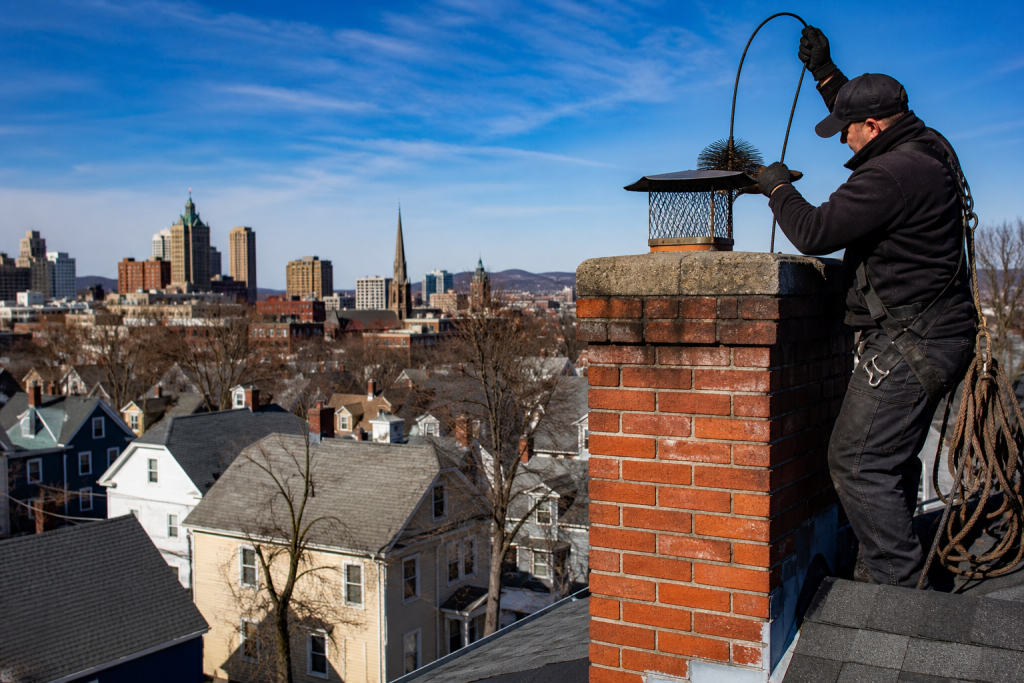
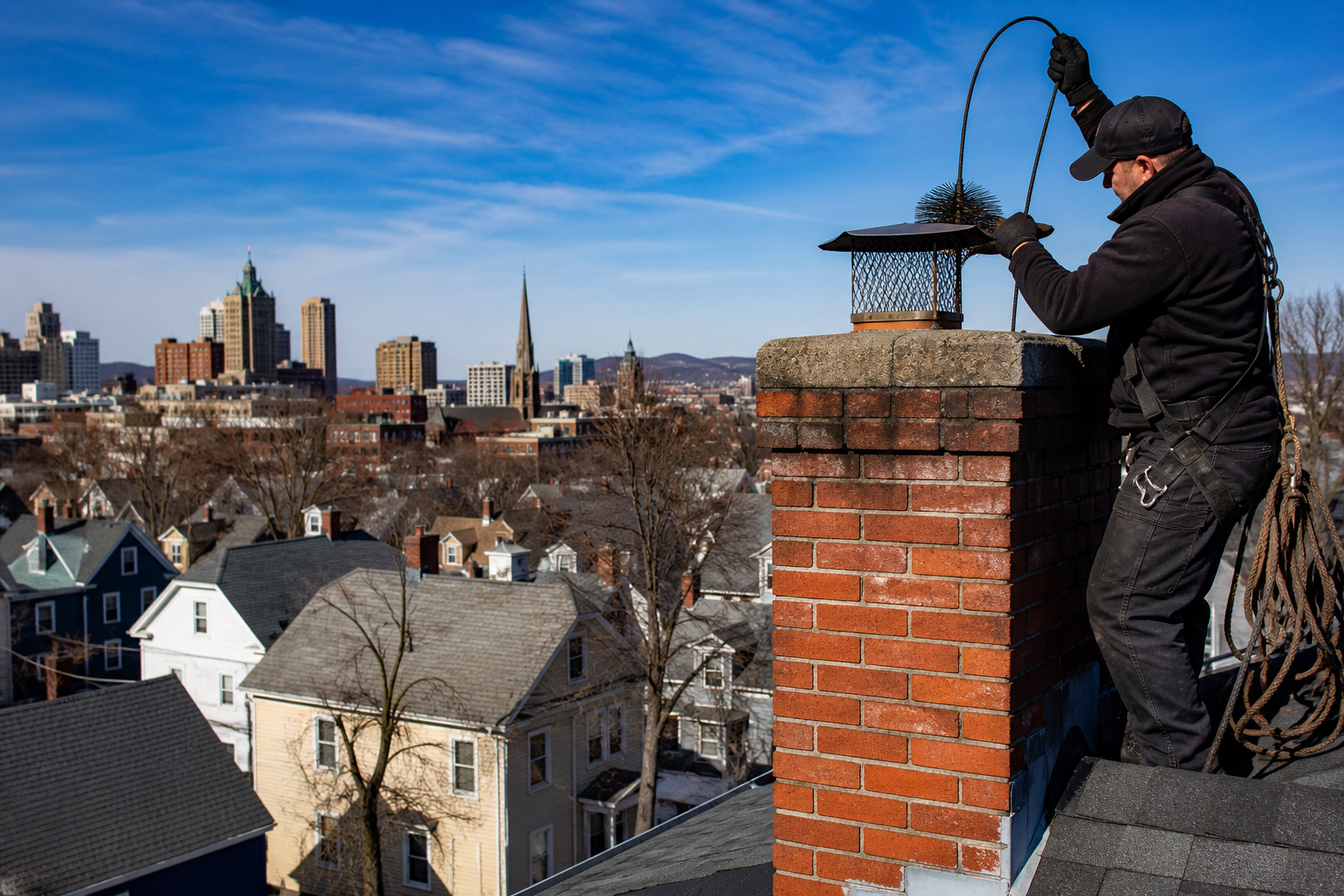
HeatShield Chimney Cleaning & Sweep in New Haven: A Homeowner’s Guide
HeatShield chimney liner restoration in New Haven typically costs $1,800–$3,200 versus $3,500–$5,800 for a full stainless steel liner replacement, and it’s the right choice only when your terracotta flue has surface cracking, missing mortar joints, or minor spalling—not structural collapse or shifted tiles. The Cerfractory sealant bonds to existing masonry at temperatures up to 3,000°F, creating a smooth, insulated passageway that meets NFPA 211 standards for open-burning appliances. If you’d rather not guess whether your flue qualifies, call us at (888) 684-7419—George shows up on every job, and we’ll tell you straight if HeatShield makes sense or if you’re better off with a full relining.
Here’s the mistake we see most often in New Haven homes: a homeowner gets a chimney inspection, hears “cracked liner,” and immediately assumes a five-figure rebuild. Last month we were in East Rock looking at a 1920s Colonial where another company had quoted $4,800 for a stainless liner. The flue had hairline cracking and some eroded mortar joints—nothing shifted, no daylight visible, no tile fragments in the smoke chamber. We applied HeatShield, passed the video scan, and the homeowner kept $2,600 in their pocket. That said, we’ve also seen HeatShield sold on flues that were too far gone, which is how you end up with a failed inspection two years later and no recourse.
What HeatShield Cerfractory Sealant Actually Does
HeatShield isn’t paint. It’s a hybrid ceramic-refractory compound—hence “Cerfractory”—that trowels onto damaged terracotta at roughly ¼-inch thickness and cures into a monolithic, gas-tight surface. The material contains crushed ceramic aggregate suspended in a refractory binder, which means it expands and contracts at rates similar to clay flue tile rather than cracking away during heating cycles like standard refractory cement would.
Here’s what happens at the material level when we apply it:
- Mechanical bonding: We scarify the existing tile surface and apply a primer coat so the Cerfractory keys into microscopic pores rather than sitting on top like a skim coat.
- Gap bridging: The aggregate fills voids up to approximately ¼-inch wide—larger gaps require packing with refractory wool first, then capping with HeatShield.
- Insulation value: The cured layer reduces clearances to combustibles by creating a thermal barrier, which matters in older New Haven homes where framing is often closer to the chimney than modern code allows.
- Smooth interior: The finished surface improves draft and reduces creosote adhesion compared to rough, deteriorated tile.
What it cannot do: rebuild missing tiles, correct a flue that’s out of plumb or bellied, or seal around a liner that’s shifted due to foundation settlement. We’ve seen contractors in the Westville area apply HeatShield over flues with ½-inch gaps and blown-out corners—that’s not restoration, it’s a temporary patch that’ll fail under thermal stress.
When HeatShield Works—and When It Doesn’t
The decision tree is straightforward once you’ve got a proper video inspection, which is why we run a chimney camera on every evaluation in New Haven. Here’s how we classify flue conditions:
HeatShield-appropriate conditions:
- Hairline to ⅛-inch cracking in tile walls, no displacement
- Eroded or missing mortar joints between tiles (the “missing mortar” syndrome common in 1960s–1980s construction)
- Minor spalling (surface flaking) with substrate still sound
- Flue is straight, plumb, and properly sized for the appliance
Full liner replacement required:
- Tile shifted, rotated, or collapsed—structural integrity is gone
- Gaps exceeding ¼-inch that can’t be packed and bridged
- Flue is oversized for the appliance (common when wood stoves are removed and fireplaces revert to open burning)
- Chimney serves a pellet appliance or insert requiring listed liner system per manufacturer instructions
- Previous HeatShield application has failed or delaminated
In Downtown New Haven and the Hill neighborhoods, we see a lot of pre-1950s chimneys with multiple wythes of brick and no flue liner at all—just parged clay. HeatShield can sometimes parge-coat these, but only after we verify wall thickness and structural soundness. The NFPA 211 standard is clear: if the chimney won’t pass a Level 2 inspection with the restoration in place, you need a listed liner system. We don’t quote HeatShield on marginal candidates because George shows up on every job, and he’s the one who’d have to return if it fails.
How a Proper HeatShield Application Is Done
The difference between a five-year fix and a fifteen-year fix is almost always prep work and cure protocol. Here’s our process on a typical New Haven application:
- Full sweep and inspection: We clean the flue to bare masonry so we’re bonding to tile, not creosote. We video-document the pre-condition—every crack, every joint, every spall. If you’re in Prospect Hill or Wooster Square, your flue’s probably seen 80+ years of coal and wood residue; that has to come out completely.
- Masking and protection: We seal the firebox, run drop cloths, and set up negative air if needed. HeatShield is low-VOC but it’s still wet refractory mud—we’re not getting it on your hearth or furniture.
- Scarification and priming: We wire-brush or needle-gun the tile surface, then apply HeatShield’s proprietary primer. Skip this step and you’re relying on suction alone; we’ve seen delaminations where contractors went straight to topcoat.
- Base coat application: We trowel the Cerfractory mix to fill voids and establish thickness. In a standard 8×8 flue, this takes about 45 minutes of careful work per 4-foot section.
- Cure period: Minimum 24 hours ambient cure before light firing, 72 hours before normal use. We leave written instructions—New Haven’s humidity in July can stretch this, and we account for that.
- Post-application video inspection: We camera the finished flue to verify continuous coverage, proper thickness, and no holidays or pinholes. You get the video file.
Rushed jobs skip the primer, skimp on thickness, or fire the appliance too early. The material cures by hydration and air-drying; force-drying with a heat gun or premature firing creates microcracks that propagate under thermal cycling. We’ve repaired three “competitor” HeatShield jobs in Hamden and East Haven where the homeowner was told they could burn that evening.
Cost: HeatShield vs. Full Relining in New Haven
Pricing varies with flue height, accessibility, and condition, but here’s what we’re typically quoting in 2024–2025 for standard New Haven configurations:
| Configuration | HeatShield Restoration | Stainless Liner (DuraFlex or equivalent) |
|---|---|---|
| Single-flue Cape Cod, 1 story | $1,800–$2,400 | $3,200–$4,200 |
| Two-flue Colonial, 2.5 stories | $2,600–$3,200 | $4,800–$5,800 |
| Fireplace + furnace flues, combined | $3,000–$3,800 | $5,500–$7,200 |
The HeatShield quote includes sweep, video inspection, prep, material, application, and post-scan. The stainless liner quote includes liner, insulation, top plate, connector, and new cap—typically with Gelco or Olympia Chimney hardware, not unbranded catalog substitutes.
Where the math shifts: if your chimney needs crown repair, tuckpointing, or a new cap anyway, we’re already on the roof and scaffolding. The incremental cost of full relining drops, and the lifetime value of stainless—50+ years versus HeatShield’s 15–20—starts to look better. We run these numbers openly with homeowners in West Haven and New Haven because the right choice depends on how long you plan to stay, how you burn, and what else the chimney needs.
Why the Sweep and the Restoration Should Be the Same Technician
This is where owner-operated work shows its value. When one company sweeps, another “restores,” and a third installs the cap, nobody owns the outcome. We’ve found missing mortar joints that a sweep-only contractor didn’t flag because they weren’t trained to evaluate liner condition. We’ve found HeatShield applications where the flue wasn’t properly cleaned first, so the material bonded to creosote glaze instead of tile.
At Keystone Chimney Cleaning Greater New Haven home, George evaluates, sweeps, applies, and inspects. The hands that held the brush hold the trowel and the camera. That continuity means:
- No gaps in documentation—one video file shows before, during, and after
- No blame-shifting if something needs addressing
- No markup from subcontractor relationships
- Actual accountability: 412 homeowners have trusted us, and George’s name is on every job
Related services in New Haven: If you’re also dealing with draft issues, smoke staining, or a damaged firebox, see our Chimney Repair in West Haven and Fireplace Services in West Haven pages. For routine maintenance before restoration, our Chimney Cleaning & Sweep in West Haven covers what proper prep looks like.
The Bottom Line
HeatShield is a legitimate, code-compliant solution for specific flue deterioration—but it’s not universal, and it’s not permanent. In New Haven’s housing stock of aging Colonials, Capes, and converted multi-families, the key is honest diagnosis: camera first, quote second, application third. The $1,500–$2,500 you save versus stainless relining only holds value if the restoration passes inspection and lasts.
Key takeaways:
- HeatShield Cerfractory bonds to sound terracotta, not collapsed tile
- Proper prep, primer, and cure protocol separate lasting work from failures
- Video inspection before and after is non-negotiable documentation
- Same-technician continuity from sweep through restoration catches what handoffs miss
- Cost savings are real but situational—run the 15-year math, not just the upfront quote
If you’re in New Haven and want a straight assessment of whether your flue qualifies for HeatShield—or if you’re better off with a DuraFlex liner and professional-grade components—call (888) 684-7419. George will show up, camera in hand, and tell you exactly what we see. Estimates are free, and we don’t sell restoration on flues that need replacement.
Frequently Asked Questions
HeatShield chimney liner restoration in New Haven typically runs $1,800–$3,200 for single and two-flue residential chimneys, depending on flue height, accessibility, and the extent of prep work needed. A full stainless steel liner replacement for the same configuration usually costs $3,200–$5,800. We provide itemized quotes after video inspection—call (888) 684-7419 for a free estimate.
A properly applied HeatShield Cerfractory coating lasts 15–20 years with annual sweeping and appropriate burning practices. The warranty from the manufacturer covers material defects; our workmanship covers proper application. We’ve inspected 8-year-old HeatShield jobs in New Haven that still scan clean, and we’ve repaired 2-year-old failures where primer was skipped or curing was rushed.
HeatShield can be used on gas appliance flues only if the appliance is listed for use with a masonry chimney and the flue meets sizing requirements per NFPA 54. Most direct-vent and B-vent gas fireplaces require listed metal venting, not restored masonry. We evaluate gas flues in New Haven on a case-by-case basis—incorrect application on a high-efficiency gas appliance can cause condensation damage and CO hazards.
You need a Level 2 chimney inspection with internal video scanning to determine this definitively. Hairline cracking, missing mortar joints, and minor spalling in a straight, plumb flue typically qualify for HeatShield. Shifted tiles, structural collapse, oversizing, or previous restoration failure require a listed stainless steel liner. In our 11 years focused on chimneys, we’ve found that about 60% of deteriorated flues in New Haven’s older homes are HeatShield candidates—the other 40% need full relining. Call (888) 684-7419 to schedule your inspection.
Written by George Nguyen, Owner & Lead Technician at Keystone Chimney Cleaning Greater New Haven, serving New Haven since 2015.
Need Chimney Cleaning Help?
Call Keystone Chimney Cleaning Greater New Haven — licensed & insured, here with fast after-hours help in New Haven.
(888) 684-7419